

savor the Tradition: Jordanian Mansaf with Lamb Explained
In the heart of the Middle East, where the arid landscapes cradle rich histories and vibrant cultures, one dish stands as a testament to Jordan’s culinary heritage: mansaf.This iconic meal marries succulent lamb, fragrant rice, and tangy yogurt sauce, creating a symphony of flavors that transcends mere sustenance to embody a deep-rooted cultural tradition. But Mansaf is more than just a dish; it is a festivity of hospitality, family, and the bonds that unite communities. As we embark on a journey to explore the intricacies of this beloved Jordanian delicacy, we’ll unveil the stories etched into its readiness and presentation, discovering how each ingredient reflects the generosity and warmth of Jordanian culture. Prepare your senses for an exploration of taste, tradition, and the timeless art of gathering around the table for a soulful meal.
Savor the tradition of Jordanian Mansaf with lamb, a dish that encapsulates the essence of Jordanian culture and hospitality. this emblematic meal is not just a recipe; it tells a story of heritage, family gatherings, and special occasions. Originating from the Bedouin tribes, Mansaf is a celebration of flavors and a symbol of generosity that has traveled through time, evolving yet remaining true to its roots. For anyone who wishes to experience the rich tapestry of Jordanian cuisine, mastering this dish opens a gateway to understanding the heart of Jordanian heritage.
Prep and Cook Time
- Prep Time: 30 minutes
- Cook Time: 2 hours
- Total Time: 2 hours 30 minutes
Yield
- Servings: 6-8
difficulty Level
- Medium
ingredients
- 1.5 kg lamb (shoulder or leg), cut into chunks
- 3 cups water
- 1 large onion, quartered
- 4-5 green cardamom pods
- 2-3 cloves
- 1 small cinnamon stick
- Salt, to taste
- 2 cups plain yogurt, well-stirred
- 2 tablespoons ghee (or butter)
- 2 cups basmati rice
- 1/4 cup pine nuts, toasted
- 1/4 cup almonds, toasted and slivered
- Fresh parsley or mint for garnish
- 2 flatbreads (optional, for serving)
Instructions
- Prepare the lamb: In a large pot, combine the lamb chunks, water, onion, cardamom pods, cloves, cinnamon stick, and a pinch of salt. Bring to a boil, then reduce the heat and simmer for about 1.5 to 2 hours, until the lamb is tender.
- Cook the Rice: Once the lamb is tender,remove the chunks and set them aside. Strain the broth, reserving the liquid. Measure out 4 cups of the strained broth and return it to the pot. Add 2 cups of basmati rice to the broth, bring to a boil, then reduce heat to low, cover, and simmer for about 20 minutes or until the rice is fluffy and fully cooked.
- Prepare the Yogurt Sauce: In a separate pot, gently heat the yogurt over low heat, stirring frequently to prevent curdling. Once warmed, turn off the heat and add a ladle of the broth into the yogurt, stirring continuously to temper it. This will help combine the flavors without the yogurt splitting.
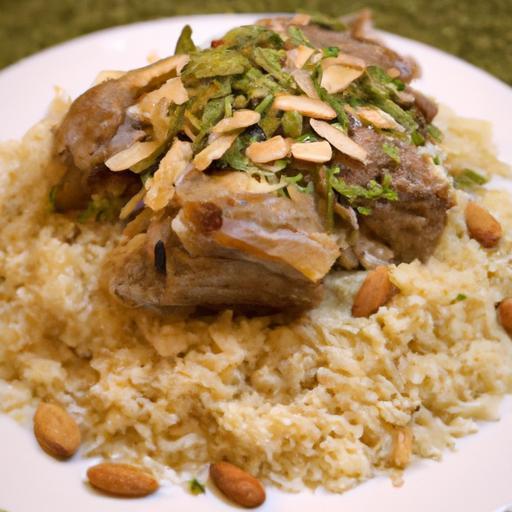
- Assemble the Dish: In a large serving dish, layer the cooked rice, making a slight well in the center. Place the lamb chunks on top of the rice. Pour the yogurt sauce generously over the lamb and rice, letting it flow down the sides.
- Finish with Garnish: in a small pan,heat the ghee over medium heat and toast the pine nuts and almonds until golden brown. sprinkle over the Mansaf. For an extra touch,garnish with fresh parsley or mint.
- Serve: Present the Mansaf on the table with flatbreads on the side. It’s conventional to serve this dish family-style, inviting everyone to dig in and share.
Chef’s notes: Tips for success
- For a rich flavor, consider marinating the lamb in yogurt mixed with spices the night before cooking.
- If you prefer a vegetarian version, substitute lamb with jackfruit or a mix of seasonal vegetables, maintaining the yogurt sauce as the key element.
- To avoid curdling when heating the yogurt, always stir continuously and ensure the heat is low. You can also use a double boiler if necessary.
- Your choice of rice matters-basmati rice gives a lovely aroma and a fluffy texture that complements the dish perfectly.
- This dish can be made ahead of time; simply reheat and add garnishes right before serving.
Serving Suggestions
To elevate the dining experience, serve Mansaf on a large decorative platter that shows off the beautiful layers of rice and lamb. offer flatbreads alongside for scooping up the tasty morsels. Use vibrant garnishes such as fresh herbs to provide a pop of color,creating an inviting atmosphere. It’s customary for diners to gather around the dish, and sharing from a common platter fosters a sense of community-perfectly embodying the spirit of Jordanian hospitality.
| Nutrient | Per Serving |
|---|---|
| Calories | 700 |
| Protein | 45g |
| Carbohydrates | 80g |
| Fat | 30g |
Q&A
Q&A: Savor the Tradition – Jordanian Mansaf with Lamb Explained
Q1: What is Mansaf, and why is it significant in Jordanian culture?
A1: Mansaf is frequently enough regarded as the national dish of Jordan, embodying the country’s rich cultural heritage. Traditionally served during special occasions, weddings, and family gatherings, it symbolizes hospitality and communal bonding. The dish features lamb simmered in a fragrant yogurt sauce, served atop a bed of fragrant rice, and garnished with almonds and pine nuts. Its preparation and presentation are as much a part of the experience as the delicious flavors themselves!
Q2: What are the main ingredients in Mansaf?
A2: The heart of Mansaf lies in its simple yet flavorful ingredients.The star component is tender lamb, frequently enough cooked until it’s melt-in-your-mouth good. The lamb is usually paired with a unique jameed, wich is dehydrated yogurt that adds a tangy flair to the dish. It’s served overrice, often infused with spices like cardamom and cinnamon, and topped with fried almonds and pine nuts for a delightful crunch. Fresh herbs can also be used for garnishing, enhancing the overall aroma and presentation.
Q3: How is Mansaf traditionally served?
A3: Mansaf is traditionally served on a large round platter, bringing friends and family together around one meal. the rice forms a fluffy cloud base, lovingly cradling the tender lamb pieces. The sauce is ladled generously over the lamb and rice,and it’s common for families to gather around the dish,eating with their hands,signifying unity and shared enjoyment. It is customary to serve it with Arabic flatbreads, which are perfect for scooping up the delicious components.
Q4: Can I find vegetarian versions of Mansaf?
A4: While traditional Mansaf is focused on lamb, creative cooks have adapted the recipe to fit vegetarian diets by substituting lamb with hearty vegetables, chickpeas, or even mushrooms, paired with a rich yogurt sauce made from a plant-based alternative. This version still captures the essence of the communal meal and remains a wholesome celebration of flavors.
Q5: What occasions call for making Mansaf?
A5: Mansaf is a cherished dish that graces tables during significant moments in life. Common occasions include weddings, religious holidays, and important family gatherings. It’s a way to mark these events and demonstrate cultural pride. In many households, preparing and sharing mansaf becomes a joyous celebration in itself, with loved ones coming together to bond over the cooking process and the meal.
Q6: What are some tips for perfecting Mansaf at home?
A6: To create a mouthwatering Mansaf at home, start with quality cuts of lamb, ensuring they are properly browned to enhance their flavor.If using jameed, rehydrate it thoroughly to capture its essence. Don’t rush; slow-cook the lamb in the yogurt sauce to develop rich flavors. Be generous with the garnishes, as they add an appealing texture and visual allure. lastly,channel the traditional spirit of sharing and enjoy the preparation process with friends and family for a truly authentic experience!
Q7: How can I learn more about the cultural aspects of Mansaf?
A7: Exploring the cultural meaning of Mansaf can deepen thankfulness for not just the flavors but the traditions behind the dish. Consider attending local cultural events or workshops focusing on Jordanian cuisine-or even reaching out to Jordanian communities to learn directly from those who grew up with the dish. Additionally, many cookbooks and online resources delve into the history and significance of Mansaf, offering insights into its place in Jordanian society.
Final Thoughts
As we conclude our journey through the rich tapestry of Jordanian cuisine, Mansaf stands out not just as a dish, but as a vibrant symbol of culture, hospitality, and tradition. The layers of flavors, from the tender lamb to the aromatic spices, tell stories of a land steeped in history. Each mouthful of this beloved dish invites you to partake in a ritual that transcends generations, connecting families and friends in a shared experience of joy and celebration.
Mansaf is more than just a meal; it is indeed an embodiment of the Jordanian spirit-generous, warm, and welcoming. Whether you’re savoring this delicious feast at a bustling gathering or enjoying a quiet moment of reflection, the essence of Mansaf captivates the heart. so, the next time you find yourself in the presence of this traditional dish, take a moment to appreciate the artistry behind it and the stories it carries.
Embrace the flavors,the history,and the communal spirit it represents,and let every bite be a journey into the soul of Jordan. Savor the tradition, share the love, and celebrate the bond that food creates across cultures and borders. Happy feasting!